

If you’re searching for a “tinder for couples” experience, here’s what you need to know. This guide is for couples seeking to navigate dating apps together, understand the limitations of mainstream platforms like Tinder, and discover dedicated alternatives designed for partnered experiences. As more couples explore dating apps to find thirds, other couples, or simply to expand their social circles, unique needs and challenges arise—ranging from account restrictions to privacy concerns and the desire for shared control. Addressing these issues is crucial for couples who want a safe, inclusive, and enjoyable experience online.
What “Tinder for Couples” Really Means in 2026
Around 2014, couples started creating profiles on Tinder and OkCupid to find thirds or other couples. They would upload shared photos, write joint bios, and message potential matches together. The experiment did not last long. Tinder is primarily designed for individual users rather than couples, and its terms restrict solicitation. Profiles showing two people were flagged, reported by confused singles, and often removed.
By 2023, the problem had only grown. A survey found that 45.1% of Tinder users reported being in a relationship, and 20.2% of Tinder users stated they were married. Couples often adapt their use of Tinder by creating shared profiles or using separate accounts, but both approaches lead to bans, shadowbans, or mismatched expectations with solo users who did not sign up to date a pair.

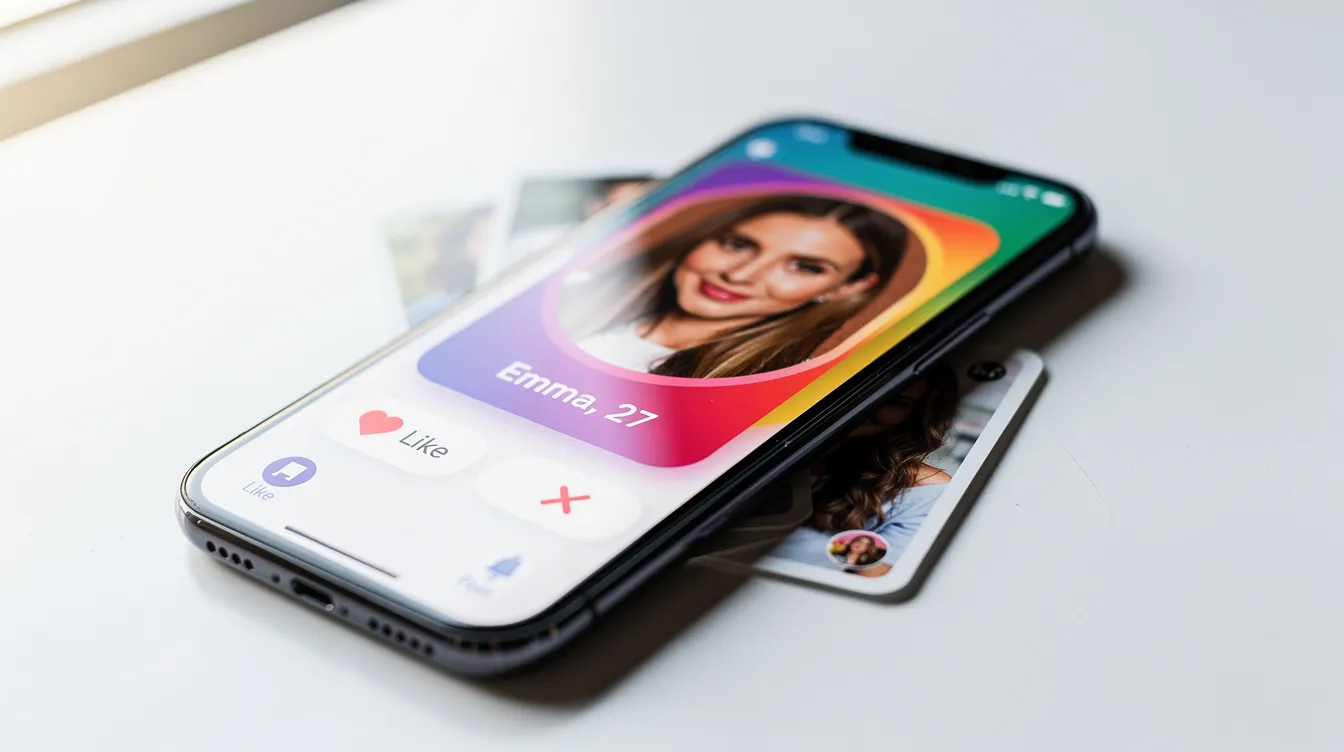
So what does “tinder for couples” mean now? It describes a dating app experience built for two or more people who share a single profile, shared intentions, and joint control over every message and match, helping couples meet people they would not otherwise encounter. Tinder is available in over 190 countries, but none of that reach helps if your account gets restricted the moment you mention your partner. Swing Social is a modern alternative in the lifestyle and non-monogamy space: it works like Tinder in its swipe interface, but every feature is designed from the ground up for swinging, ENM, and polyamory.
The core idea comes down to a few concrete needs:
- Couples want a Tinder-style interface (browse, like, chat, match) without violating any app’s terms of service.
- Both partners need to share control of the account, see the same inbox, and reply together.
- Profiles should represent two (or more) people openly, with room for each person’s preferences, boundaries, and photos.
- Filtering should go beyond age and location to cover relationship style, kinks, and orientation.
- The community itself should treat couples as normal, not as rule-breakers to report, so Swing Social can fit whatever kind of connection they want, from casual fun to something more serious.
Why Couples Look Beyond Tinder and Mainstream Dating Apps
Mainstream dating apps like Tinder, Bumble, and Hinge are built around one person looking for one other person. Their community norms, moderation, and profile structure reflect that assumption. Lifestyle platforms start from a different premise: partnered users are the expected user, not the exception.
Between 2018 and 2024, a growing number of partnered users quietly used Tinder to explore threesomes and swinging, even as Tinder connected millions of users worldwide. Ethical non-monogamy has increased since the COVID pandemic, and by 2024, 31% of single Americans had tried consensual non-monogamy according to Match’s “Singles in America” survey. On Tinder’s Explore update in early 2024, 14% of users who selected a “Relationship Type” chose ENM, open, or polyamory. Tinder even offers a Double Date feature for group interactions. Still, couples hitting the app run into specific problems:
- Profile space fits one person. There is no way to write dual bios, list both partners’ orientations, or show joint consent.
- Single users feel misled when a couple appears in their feed, leading to reports and profile removals.
- Filtering for ENM, bi-friendly matches, or kink preferences is thin or nonexistent on most mainstream apps.
- A 2026 study on couples pursuing a “third” found that the process creates power imbalances and ethical tensions when done on platforms not designed for it.
- Couples serious about ethical non-monogamy want a plan where their relationship status is the norm, not something they have to hide on Tinder or solve by paying for a workaround on a dedicated app.
Safety First: Real People, Fewer Fake Accounts, and Community Standards
When two people share a profile, the stakes around authenticity double. A fake account wasting time is annoying for a solo user; for a couple, it wastes two people’s night and can create tension. Community-focused apps prioritize member verification and user privacy in alternative relationship settings precisely because of this dynamic.
Swing Social requires human review of every account before it goes live. Profiles judged as fake accounts are rejected before they can message anyone. This is a different model from Tinder, which offers Photo Verification for user safety but still relies on post-hoc reporting. Some users on mainstream apps also report bans or restrictions with no clear explanation. Tinder includes features to block, unmatch, and report users, but those tools activate after a bad experience has already happened.
The difference in community standards shows up in practice:
- Swing Social enforces a real person policy: photo checks and optional ID verification filter out bots before they reach the feed.
- Mainstream dating apps often leave couples to deal with spam, low-effort profiles, and catfish accounts on their own.
- Swing Social’s consent-first culture means zero tolerance for harassment, clear rules on sharing photos, and quick response times when users report violations.
- The platform’s goal is not just to be a dating app; it is a curated adult community where swingers, poly folks, and curious couples can create profiles showing their real faces and real relationship structures.
How the Swing Social Dating App Works as a “Tinder for Couples”
Swing Social gives couples, singles, throuples, and polycules a familiar swipe-style interface that feels like a modern dating app but is built for open relationships, with the ability to browse, match, and chat together. Dedicated apps for couples often provide features like linked profiles and group chats; Swing Social builds on that foundation with lifestyle-specific tools.
Profile Creation and Management
- Couples create a single shared profile listing both partners, photos together and separate, relationship style (swinging, polyamory, soft swap, full swap), and clear boundaries.
- Profiles can be customized to reflect each partner’s preferences and boundaries.
Messaging and Communication
- Both partners see and control the conversation from a shared inbox.
- Like or message other couples, singles, or groups.
- Both partners access the chat and decide together whether to connect, share additional photos, or figure out whether there’s a genuine connection before meeting in person.
Double Date and Event Discovery
- Event discovery is integrated: find local lifestyle events, RSVP, and see who else is attending.
- Travel features let couples set a temporary location for destinations like Barcelona, Cancun, or Las Vegas and browse events and meetups before flights are booked.
- Travel meetups cater to singles, couples, and polycules through the same platform.
Privacy Controls
- Visibility settings let you control whether your profile appears locally, in travel mode, or only at events.
- Adjustable location settings: hide exact GPS coordinates, show only city or neighborhood.
Additional Features
- Browse and swipe or use advanced search to find new people in your area or globally.
- Filter for same-room only, bi-friendly couples, kink-friendly partners, or LGBTQ+ users.
Key Match Features Couples Need (That Most Dating Apps Don’t Offer)
Couples using a tinder for couples platform are looking for more than quick swipes. They need tools that respect boundaries, privacy, and logistics for two (or more) people. Here are the features that matter:
Shared Inbox and Permissions
- Shared inbox: both partners see every message, both can reply, and neither is left to miss a conversation.
- Role-based permissions: one partner can control media access, or both can approve who the couple interacts with.
Privacy and Photo Controls
- Face-blur and “friends only” photo galleries for users who are not fully out about their lifestyle life.
- Adjustable visibility: local vs. global, or restricted to event attendees only.
Event Discovery and Group Chats
- Event discovery: local swinger parties, hotel takeovers, club nights, and kink-adjacent events, with a filter for date, city, and type, similar to what you will see on free swinging sites and local swinger communities.
- Group chats between two couples or larger constellations, with read receipts and optional photo expiration.
Messaging and Travel
- 3Fun, another app in this space, allows unlimited private messages for free matches, showing that messaging without a paywall is a standard couples expect; some apps can still be used for free without a purchase, while paid tiers add extra features, so couples may compare whether upgrading is worth it based on how much messaging access they need. On iOS, subscription charges are typically handled through the Apple account, and auto-renew can be turned off in settings.
- Travel mode: set a temporary location, explore possibilities in a new city, and plan ahead.
Ethical Non-Monogamy, Consent, and Communication for Couples
Ethical non-monogamy includes various relationship styles like polyamory, swinging, soft swap, relationship anarchy, and kink-based play partnerships, and some people are looking for love while others want casual exploration depending on the relationship style. Clear communication and defining boundaries are essential for couples exploring non-monogamy. 3Fun supports 10+ sexual orientations in user profiles, reflecting the diversity of this world.
What is Ethical Non-Monogamy?
Ethical non-monogamy (ENM) refers to relationship structures where all partners consent to having romantic or sexual connections outside the primary relationship. This includes various relationship styles like polyamory (having multiple loving relationships), swinging (partner swapping or group play), open relationships, and more. The key is open communication, honesty, and mutual agreement among all involved.
Communication and Consent
- Before downloading any app, each partner should be asked: what are you comfortable with? What does a “no” look like in practice? Are solo dates allowed? Are you comfortable with a connection that lasts one night, a few months, or longer?
- Safer sex boundaries, STI testing frequency, and condom use should be part of the plan, not an afterthought.
- Swing Social’s community guidelines encourage consent culture, with resources on first meets, check-ins during play, and aftercare.
- Inclusion is built into profile design: straight, bi, pan, gay, queer, trans, and non-binary users can specify orientations and pronouns directly, so every person’s story and identity are visible.
Privacy, Discretion, and Data Safety for Couples on Lifestyle Apps
Privacy is a top concern for couples exploring swinging and ENM. Jobs, children, extended family, and social stigma remain real factors in 2026. One leaked photo or a profile spotted by a friend can lead to consequences for both partners.
Privacy Controls
- Profile visibility controls: choose whether your couple profile appears in local searches, travel mode only, or to event attendees after RSVP.
- Blocking and reporting tools: quickly block profiles, report violations, and access support when boundaries are crossed.
- Encrypted connections and minimal data sharing reduce exposure; Swing Social positions itself as a premium, privacy-aware alternative.
- Adjustable location settings: hide exact GPS coordinates, show only city or neighborhood.
Privacy controls in dating apps help users manage visibility and maintain safety in alternative relationships. The 3Fun app focuses on connecting open-minded individuals and uses presigned URLs to secure user photos. 3Fun also allows users to hide their distance and profile. Data privacy practices may vary based on user region and age, so couples should review each platform’s data handling before uploading sensitive content.
Getting Started: From First Conversation to First Event
The path for a new couple in 2026 is straightforward: learn each other’s boundaries, create a profile, connect online, and transition to vetted events or low-pressure meetups. Start with the conversation, not the download.

Steps to Get Started
- Talk as a couple first. Decide whether you are more curious about threesomes, couple swaps, or forming a polycule. Set boundaries and a safe word.
- Build a compelling couple profile on Swing Social: joint photos, short bios for each partner, and a clear statement of what you are seeking (e.g., “bi-friendly soft swap with similar-aged couples near London”).
- Start with low-stakes interactions: group chats with nearby couples, drinks at a public bar, or attending a social-only lifestyle event listed on the platform. No pressure to do anything beyond having fun, meeting people, and learning what kind of connection feels right together.
- Move to in-person meetups only after a video call, verification badge exchange, or mutual references. Confirm details, agree on a safe word, and discuss aftercare expectations.
- Explore Swing Social as your tinder for couples option: it is a dedicated lifestyle community, not a generic dating app with a couple checkbox, and a dedicated app helps couples use English-language profile text clearly if they are traveling or connecting internationally.
Swinger events cater to open-minded singles and couples and promote connections among non-monogamous relationships, and resources like the Swing Social swinger lifestyle blog can help newcomers understand etiquette, safety, and what to expect. These events often include community gatherings and parties where participants can engage with throuples and polycules. Swinger events are popular among diverse sexual orientations, so whatever your orientation, there is a room for you.
Where “Tinder for Couples” Is Heading Next
Since 2020, visibility for ENM in mainstream media has grown. More couples openly identify as swingers or poly on social networks. Tinder has facilitated over 55 billion matches since launch, proving the demand for digital connection at scale. The next step is matching technology that understands constellations, not just individuals.
Feeld is designed to cater to open-minded relationships and allows partners to link profiles with a feature called Constellations. Users also compare apps by platform support, including whether they offer web and mobile access. #open is built for open relationships and ethical non-monogamy with a unique hashtag search system. These platforms, alongside Swing Social, are shaping a product category that did not exist a decade ago. Swing Social plans to evolve with richer profiles for polycules, improved event discovery in major lifestyle destinations, and enhanced tools for verified, real person connections. Reviewers sometimes share cautionary stories—such as Haley describing an account restriction after months of use—to show why transparent moderation matters.
- The long-term shift moves from hookup-only dating apps toward full-spectrum adult communities where people can date, attend events, stay connected through travel, and maintain ongoing friendships.
- Smarter matching will account for relationship structures: a couple looking for another couple needs different algorithms than a solo user looking for one match.
- Integration with real-world events, lifestyle vacations, and local meetups will bring the developer focus from pure swiping to community building.
- Consent tools will mature: digital boundary-setting, reputation systems based on community review, and screenshot protection are all on the horizon.
- “Tinder for couples” is not a gimmick. It is part of a broader movement toward transparent, consent-based relationships supported by the right technology. If you and your partner are ready to find your people, Swing Social is where that search begins.