
Swinging has moved from hushed conversations and hidden clubs to a visible, structured community with its own platforms, events, and social norms. This guide breaks down what swinging actually means, how it started, the different styles people practice, and how Swing Social helps people connect safely within the lifestyle.
What Is Swinging? (Quick Answer Up Front)
Swinging involves exchanging sexual partners between couples, and it is a form of group sex, but it is not the same as a random hookup or an anonymous encounter at a party. The difference lies in structure: swinging happens within pre-agreed rules between people in committed relationships who choose to explore together. It is often associated with group sex activities, but the defining feature is mutual consent and ongoing partnership.
Here is what separates swinging from other types of sexual exploration:
- Consensual partner exchange. Both (or all) members of a primary relationship agree to engage with others. This applies to couples, throuples, and polycules.
- Ethical non-monogamy. Swinging falls under this umbrella. Transparency, consent, and communication are the core principles, not secrecy or deception.
- Honesty and boundaries. Swinging emphasizes honesty, communication, and explicit boundaries set by partners before any encounter takes place.
- Enthusiastic, revocable consent. Consent is central to swinging and must remain enthusiastic and revocable at every stage. Participants must give fully informed, enthusiastic consent without pressure.
- Boundary-setting as a prerequisite. Setting boundaries is crucial for successful participation in swinging. Couples who skip this step tend to encounter problems quickly.
Swing Social is a premium dating and events platform built specifically for the swinger and non-monogamy community. It connects singles, couples, throuples, and polycules through verified profiles, curated events, and privacy-first features designed for people who take this lifestyle seriously.
Origins, Meaning & Types of Swinging
The term “swinging” entered American media during the 1950s. Some historians trace its roots to U.S. military communities during World War II, particularly among pilots and their spouses who formed close social bonds under high-stress conditions. The practice became more visible during the 1960s and 1970s sexual revolution, as contraception became widely available, women’s liberation reshaped attitudes toward female sexuality, and countercultural movements challenged traditional monogamy.
What swinging means in practice
At its core, swinging is the consensual exchange of sexual partners between couples or groups. Swinger events often involve partner swapping as the central activity, though the specific arrangement varies by couple and context.
Swinging differs from related relationship models in concrete ways:
- Open relationships allow partners to have sexual or romantic connections outside the couple, but do not require swapping or mutual participation.
- Polyamory centers on maintaining multiple romantic and emotional relationships with the knowledge and consent of everyone involved.
- Casual dating typically involves no pre-existing committed relationship and no structured agreements.
Swinging focuses on sexual exploration while keeping the primary romantic bond intact. It offers couples a way to explore recreational sexual variety together, without forming new romantic attachments.
Cultural variation in how the term is used
Language and culture shape what “swinging” means in different countries. In German-speaking contexts, “Swinger” is sometimes used as a broad euphemism for group sex or partner exchange, and connotations can shift by region. In Polish lifestyle discussions, swinging is more narrowly defined as exchanging sexual partners with another couple, with less cultural tolerance for ambiguity. Across all these contexts, the umbrella term “ethical non-monogamy” has gained traction as a way to describe the shared values of consent and transparency.
Types and styles of swinging
Not all swinging looks the same. Here are the main styles:
- Soft swap. Soft swapping involves sexual activities that exclude full intercourse. Depending on the couple, this can include kissing, touching, or oral sex with other partners.
- Full swap (hard swap). Full swap includes penetrative sex between partners who are not in the original couple.
- Same-room vs. separate-room. Couples can decide arrangements such as same-room or separate sexual activities. Some prefer to stay together in one space; others choose privacy.
- Hard limits and soft limits. Establishing hard limits (absolute boundaries) and soft limits (negotiable under certain conditions) helps avoid misunderstandings and protects everyone involved.
- Frequency. Some couples visit a club twice a year; others attend monthly events, coordinate travel meetups, or integrate swinging into a broader ethical non-monogamy structure.

A couple in Berlin, for example, might attend a swingers club twice a season, stay in the same room, and limit activity to soft swap. A polycule in London might mix swinging with polyamory, coordinate travel meetups through online platforms, and maintain written agreements about boundaries. Exploration of fantasies in these contexts can enhance intimacy in a primary relationship, because both partners participate in choosing and shaping the experience together.
Modern Swinging Lifestyle & How Swing Social Fits In
Swinging in 2026 bears little resemblance to the secretive, invite-only clubs of the 1970s. Online platforms, vetted events, travel meetups, and visible LGBTQ+-inclusive communities have replaced the old model. A 2024 report by Match and the Kinsey Institute found that 31% of American singles have experimented with ethical non-monogamy, with swinging as one of the reported categories. According to research published in the Journal of Sex & Marital Therapy, about 2.35% of Americans currently self-identify as swingers, and roughly 4.76% have participated at some point in their lives.
Who participates
The swinging community is broader than most people assume. Participants include:
- Open-minded singles, couples, and throuples across orientations: straight, bi, gay, queer.
- People curious about kink, group experiences, or voyeurism and exhibitionism.
- Professionals and parents seeking safe, discreet exploration within clear agreements.
Swinging can provide novelty and excitement to long-term partnerships. Partners who swing often report that the shared experience strengthens trust and communication within their primary relationship. While swinging, partners can experience increased sexual satisfaction and relationship quality, according to studies that disaggregate by relationship type.
Couples typically prioritize their primary relationship over outside encounters. The lifestyle works best when both people enter it from a position of relationship strength. Swinging isn’t suitable for repairing already-fragile relationships; it tends to amplify existing dynamics, not fix them.

How people find each other
Gone are the days of classified ads and whispered referrals. Here is how people connect within the swinging community today:
- Lifestyle dating platforms. Dedicated platforms like Swing Social replace generic dating apps with tools built for the community’s specific needs: joint profiles, boundary declarations, orientation filters, and event coordination, and there are also free swinger sites and local swinger communities that offer similar features with varying levels of vetting and safety.
- Local events. The swinging community often includes clubs, events, and social networks. Club nights, hotel takeovers, and social mixers are common entry points, especially for newcomers. Event season (spring and fall in particular) brings a wave of new gatherings in most metro areas.
- Travel meetups. Members post upcoming travel plans and connect with locals or other travelers in advance. This turns a vacation into a lifestyle experience.
Swinging can create a built-in social community of like-minded individuals. Many participants report that the friendships formed through the lifestyle are as valuable as the sexual experiences, and resources like the Swing Social blog for swingers can help newcomers understand etiquette, safety, and how to navigate those connections.
Values and practicalities
Successful participation depends on a few non-negotiable practices:
- Consent at every stage. Before, during, and after. A “yes” at dinner does not carry over to the bedroom. Consent can be withdrawn at any time.
- Communication. Successful communication in swinging requires regular and transparent discussions, not just before events but afterward. Debriefing with your partner is where trust is reinforced or eroded.
- Safe sex. Sexual health considerations are vital due to the increased risk of STIs when multiple partners are involved. Regular testing, condom use, and honest disclosure of status are community expectations, not optional extras.
- Emotional awareness. Unexpected emotions can occur even in casual encounters within swinging. Jealousy can arise in swinging and must be managed with emotional intelligence, not suppressed or ignored.
- Privacy. No photographs or videos without explicit consent. No outing other participants. Discretion is a community norm.
Privacy concerns can be a significant issue for those in swinging relationships, particularly for people in public-facing careers or conservative communities. A platform’s privacy tools are not a luxury; they are a requirement.
How Swing Social supports the lifestyle
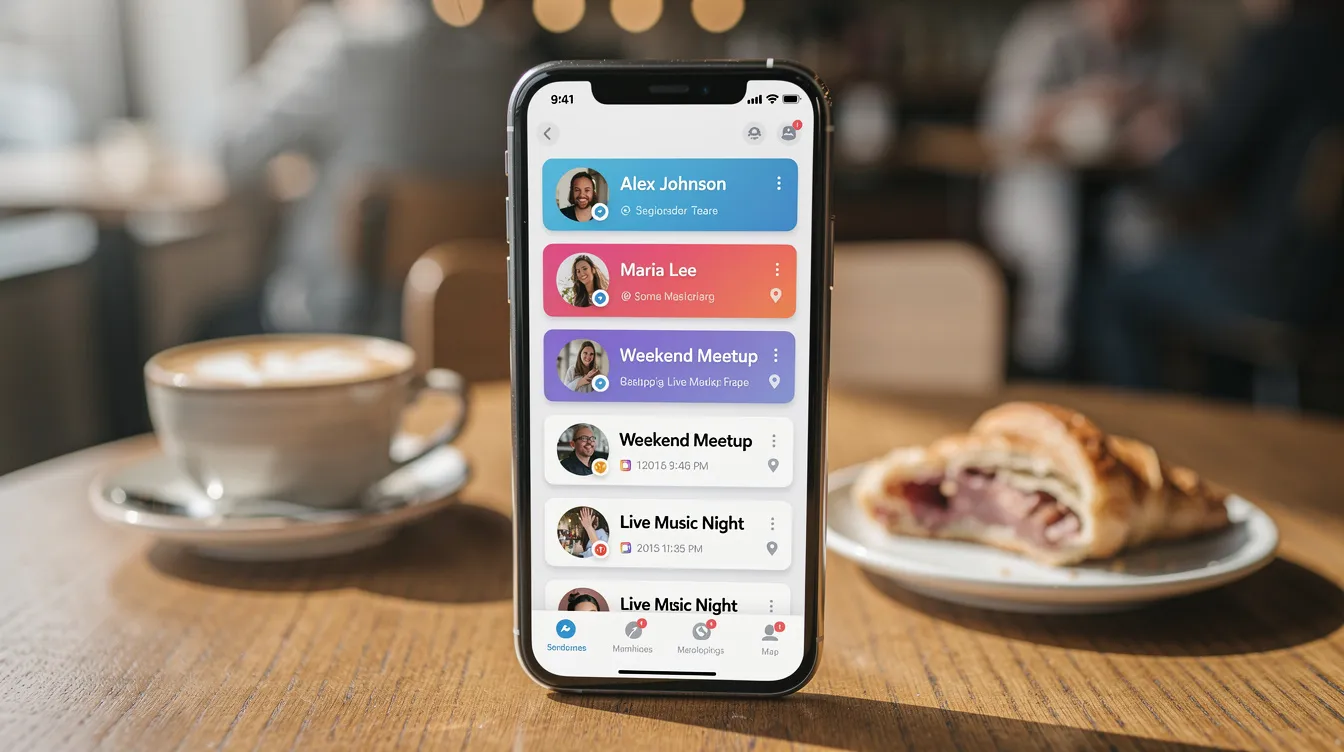
Swing Social was built specifically to address the gaps that generic dating apps and older lifestyle platforms leave open. Here is what the platform provides:
Feature | What it does |
|---|---|
Detailed profiles | Members declare relationship configuration (single, couple, polycule), interests, kinks, and boundaries directly on their profile. |
Member verification | Manual identity and face checks reduce fake profiles. Verification badges signal trustworthiness to other members. |
Privacy controls | Pseudonyms, selective photo sharing, geo-blocking, and profile visibility settings give users full control over who sees what. |
Event listings | Vetted swinger parties, social mixers, and kink-friendly gatherings from trusted organizers appear in a searchable calendar. |
Advanced search and filtering | Find compatible people by location, orientation, relationship type, kink interests, and travel dates. |
Travel boards | Members post upcoming trips so they can coordinate meetups in new cities before they arrive. |
 |
Inclusivity as a baseline
Swing Social is LGBTQ+-friendly and open to diverse relationship structures: polyamory, open relationships, “monogamish” couples, and solo participants. The platform encourages respectful language and openness to different bodies, ages, and identities. Community guidelines enforce this; profiles that violate inclusivity standards are flagged and reviewed.
Where this leaves you
Swinging is a consensual, structured approach to sexual exploration that puts communication and mutual respect at its center. It is not a free-for-all, and it is not a shortcut around relationship problems. For couples who enter the lifestyle from a place of trust and curiosity, it can deepen both sexual satisfaction and emotional connection. Swing Social exists to make that exploration safer, more private, and more connected than any previous generation of swingers had access to.
If you are curious about the lifestyle, start by having an honest conversation with your partner. Set your boundaries. Then create a free profile on Swing Social and browse verified events near you.